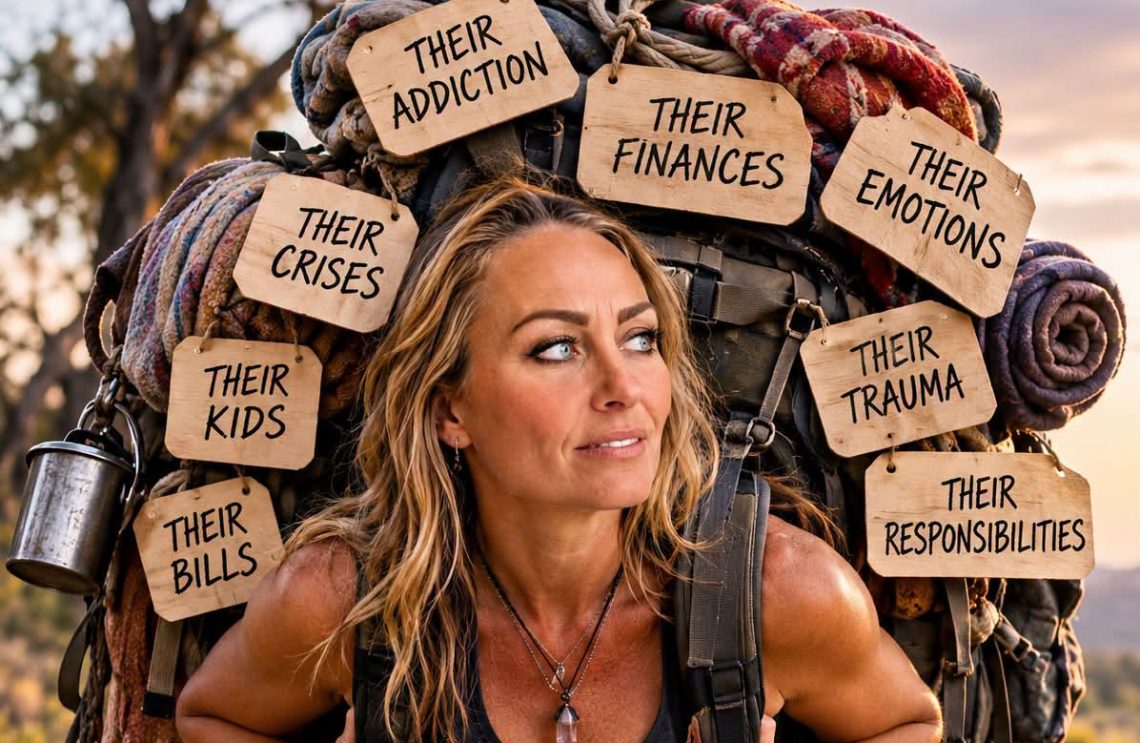
Have you ever been in a relationship where you’ve felt responsible for managing your partner’s emotional rollercoaster, addictions, fixing their problems or supporting them financially because they can’t sort themselves out? 🤔
The journey to becoming a rescuer/enabler type can start off subtly and can come from a good place.
You might have always identified as a helper type, someone who’s compassionate towards others and gets joy out of helping them. 🥰
But when it comes to close relationships, this type of empathic personality can often attract people who’ll use and abuse your good nature.
The problems start off small – one month they fall behind on their bills and you offer to help.
Then it happens again.. and again.. and the amount of money “loaned” gets bigger.
The money turns from a loan to lost never to be found again, at which point your own debt grows. 🥴
Maybe it was a natural thing for you during the initial honeymoon stage (or was it actually love bombing?) for you to drop everything to be there for them to trauma-dump on you in a time of crisis.
But then these moments of “crisis” become more regular and you realise they actually happen whenever they drink (which you now realise is quite a lot) and each time you walk away feeling like the life has been sucked out of you and nothing is ever really better afterwards.
You realise you’ve been shrinking yourself, not sharing your own problems or financial issues because you don’t want to burden them.
You start taking on responsibilities that aren’t yours and constantly sacrificing your own wellbeing – making sure you fill up their car so they don’t need to take time off work, making them lunch, dropping their kid off at school.
You ignore the fact they seem to take this for granted and never acknowledge the effort you make.
Stuff that you realise (much later) is less about caring and more about enabling them.
I got sucked into this pattern a lot in my past relationships; sometimes it was an easier way to keep the peace at the time, although it all built up to equal burnout, financial stress and chronic pain issues for me.
There’s a big difference between supporting someone who’s an adult who takes responsibility and accountability most of the time, but when they’re struggling you help them and vice versa… and just enabling a toddler in an adult body to do as little for themselves as possible because they’d rather use others for what they can take from them.
For a natural helper-type, boundaries are really difficult to set because we become people-pleasers who put everyone else first – especially if, over the years, you’ve equated being helpful/useful as a way to hold on to your connection with someone or to avoid conflict.
But you have to learn that you can hold someone’s hand and walk alongside them through their healing – you can’t do it for them.
Slipping from helper type into “rescuer-enabler” type is territory that will lead to your own demise – physically, mentally, emotionally, spiritually, financially.
Where are you taking on responsibility for someone else’s life at the expense of your own at the moment? 🧐
One of the biggest lessons I’ve learned is that healthy relationships aren’t about one person constantly giving while the other keeps taking.
As one of my Project Self Worth participants, Maya, shared about what she learned:
“The importance of reciprocation of effort… new techniques to empower me as a person to do better… improve my wellbeing as well as longer term things so we get the instant wins and long term growth.”
You can love someone without taking responsibility for fixing their entire fucking life. 🤷🏼♀️
You can be compassionate without becoming their emotional dumping ground.
You can support someone without sacrificing your own mental health, finances, happiness and wellbeing.
And you can set boundaries without being a selfish fuckwit. 😂
If you’ve recognised yourself in this blog, it might be time to look at the patterns you’re repeating in your relationships.
My FREE guide, 10 Signs Your Relationship Is Actually Toxic, can help you start recognising unhealthy relationship dynamics and understanding how they may be affecting you.
Comment/reply TOXIC and I’ll send you the link – or you can download via the link in my bio. 🔗
Because you deserve relationships where you’re supported too – not ones where you’re permanently on duty sorting someone else’s shit out.
Much love,