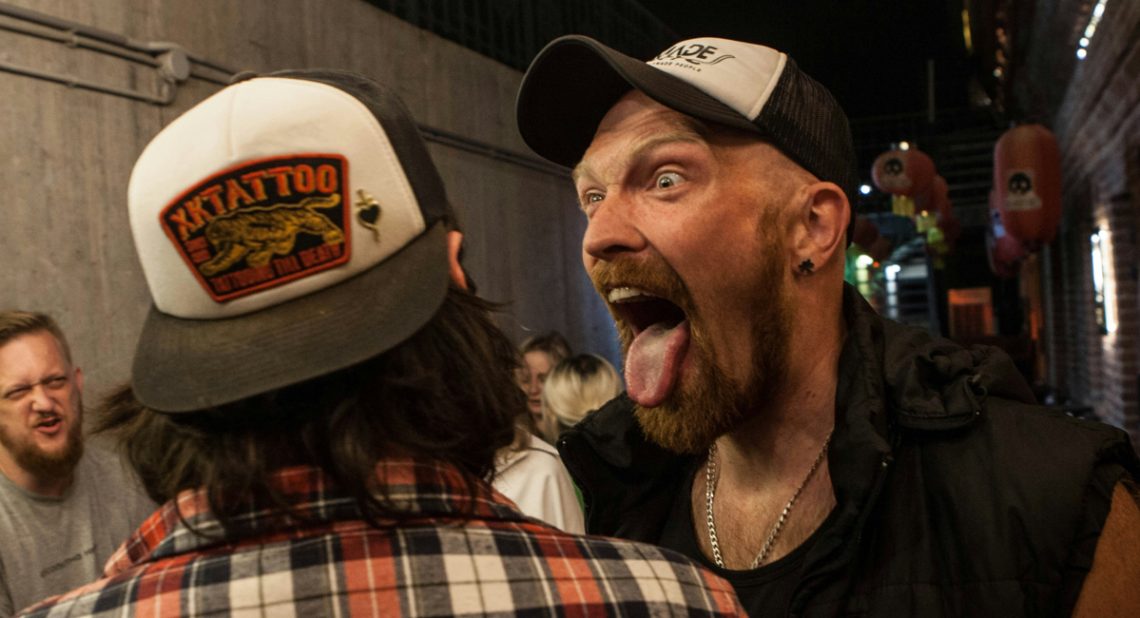
You’re down the pub with a bunch of your mates, and one of them makes a really degrading comment about a woman who walks past you. 🧍♀️
You challenge their comment and they snort back: “What, can’t you take a fucking joke?”
There’s a difference between humour and contempt – pay attention to those mates you know who repeatedly make “jokes” that target women, trivialise sexual violence or excuse abusive behaviour.
Attitudes matter – and it was one of the things I had to watch out for when assessing perpetrators of family violence in my work as a parole officer.
Many of them held beliefs around male entitlement, viewing women as possessions who should be controlled rather than as human beings with their own thoughts, feelings, opinions and rights.
They believed they were entitled to know where their partner was at all times, who she was with, what she could wear and who she was communicating with. 📱
They believed they were entitled to sex whenever they wanted it – believing they don’t need “consent” because they’re in a relationship.
They believed their partner should cook, clean, look after the kids and cater to their every fucking whim, regardless of whether she was also working a full-time job.
And if she dared to challenge any of that?
Clearly, SHE was the problem. 😡
PAY ATTENTION TO THE DOUBLE STANDARDS
Something I noticed time and time again when working with perpetrators of family violence was the ridiculous double standards they seemed to have in their relationships.
It was totally fine for THEM to go out with their mates, get pissed and roll in at whatever time they wanted, but God forbid their partner wanted a night out with the girls.
They could have female friends, but if their partner so much as received a message from another bloke, all hell would break loose. 🤬
They could shout, scream, punch walls and intimidate their partner, but if she cried in response to their behaviour, she was labelled emotionally unstable.
They could cheat on their partner and expect forgiveness, yet even the suspicion that their partner might be interested in someone else could be enough for them to justify violence towards her. 🤜
And when the relationship eventually ended, guess who was the “crazy ex”?
Yep. Her.
Funny that.
What was generally missing from these conversations was any genuine sense of accountability for their own behaviour.
WHEN MISOGYNY IS DISGUISED AS HUMOUR
Anyone who knows me knows I’ve got a pretty dark sense of humour. 😈
I’m British, I spent 18 years working in Corrections, and there’s not much left that shocks me these days when it comes to a bit of inappropriate banter.
But there’s a difference between having a dark sense of humour and repeatedly using humour as a vehicle for expressing contempt towards an entire group of people.
And there’s a difference between laughing WITH someone and laughing AT them.
When someone repeatedly makes jokes about women being stupid, belonging in the kitchen, being incapable of making decisions or deserving violence for stepping out of line, I’m interested in what sits underneath those “jokes”.
What do they actually believe about women? 🧐
Do they see women as their equals?
Do they respect a woman’s right to say no?
Do they believe a woman has the right to make her own decisions about her body, her career, her friendships and her life?
Or do they believe women should know their place?
What’s even more telling is how they respond when someone challenges them.
Do they reflect on what they’ve said?
Or do they immediately become defensive, aggressive and turn it back on the person who challenged them?
Suddenly YOU’RE the one who’s too sensitive, too politically correct, too easily offended or incapable of taking a fucking joke.
Rather than taking any responsibility for what came out of their own mouth, they make YOUR reaction the problem.
Sound familiar? 🤔
ATTITUDES DON’T EXIST IN A VACUUM
I’m not suggesting that every bloke who’s ever made a sexist joke is going to go home and abuse his partner.
But attitudes don’t exist in a vacuum.
Our beliefs influence how we treat people, what we feel entitled to expect from them and what behaviours we consider acceptable towards them.
If someone genuinely believes women are inferior to men, that men should have the final say in a relationship, or that a woman deserves to be punished for challenging her partner, those beliefs are worth paying attention to.
Especially when those beliefs are repeatedly reinforced by the people around them.
When someone makes a degrading comment about a woman and everyone around the table laughs, that laughter tells them;
We agree with you.
We think that’s acceptable.
We’re not going to challenge you.
And when someone DOES challenge the comment and everyone else tells them to lighten up, what message does that send?
That the person challenging the disrespect is somehow more of a problem than the person being disrespectful in the first place.
We need to stop normalising this shit. 💩
WHAT ARE THEY TELLING YOU ABOUT THEMSELVES?
In my last blog, I shared a comment my former partner made about a horrific case of family violence that sent shivers down my spine. 🥶
His immediate response to hearing about a woman and her family being murdered was to question what SHE had done to make him do it.
That comment wasn’t made directly towards me, but it told me so much about his attitudes towards women.
And it made me reflect on all the other comments I’d heard him make over the years.
The way he’d spoken about his exes.
The way he’d spoken about other women.
The way he’d justified his own behaviour towards me.
The way he’d made me feel responsible for HIS actions.
When you’re in a relationship with someone, particularly in those early stages when you’re loved up and everything feels amazing, it can be easy to overlook the way they speak about other people.
After all, they’re being lovely to YOU, aren’t they? 🤔
But how someone treats you when they’re trying to win you over isn’t necessarily the best indicator of how they’ll treat you when you disagree with them, disappoint them, set a boundary or decide you no longer want to be with them.
When someone repeatedly tells you what they think women deserve, they’re telling you something important about their values.
Pay attention to what they say.
Do they always blame women for men’s abusive behaviour?
Do they minimise or justify violence?
Do they speak about every former partner with contempt, calling all their exes “crazy”?
Do they mock women’s emotions whilst expecting everyone else to accommodate their own?
Do they respect women they aren’t attracted to, women who have rejected them, and women who have absolutely nothing to offer them?
Respect shouldn’t be conditional on what someone can get from you.
WHAT CAN WE ACTUALLY DO ABOUT IT?
Sometimes a simple question is enough.
“What’s funny about that?” 🤔
“What makes you think that’s acceptable?”
“Would you think that was funny if someone said it about your daughter?”
“Why are you blaming her for HIS behaviour?” 🤷♂️
It’s interesting how quickly some of these “jokes” stop being funny when someone is asked to explain exactly what the punchline is.
And to the men reading this – we need you to be part of this conversation too.
Challenge your mates when they speak about women in degrading ways.
Don’t laugh along with jokes you don’t actually find funny just because you don’t want to be the odd one out.
Don’t excuse your mate’s abusive behaviour just because he’s always been a good mate to YOU.
You can care about someone and still hold them accountable for their behaviour (unless doing so would put you at risk of harm).
WHAT HAVE YOU BEEN DISMISSING AS HARMLESS?
We’re currently in the 16 Days of Activism Against Gender-Based Violence, and I want to encourage you to reflect on some of the attitudes you’ve previously dismissed as harmless.
Have you ever laughed along with a joke that actually made you feel uncomfortable?
Have you stayed quiet when someone made a degrading comment because you didn’t want to cause an argument?
Have you ever dismissed something a partner said about another woman because they weren’t talking about YOU?
Have you ever looked back on a relationship and realised that some of those supposedly harmless comments were actually telling you something important about that person’s values?
This isn’t about beating yourself up for the things you’ve previously overlooked.
It’s about becoming more conscious of what we’re willing to accept moving forward.
Ending violence against women isn’t just about responding to violence once it’s happened.
It’s also about challenging the attitudes, beliefs and behaviours that help normalise, minimise and excuse it.
And that’s something we can all play a part in.
Because when contempt is repeatedly disguised as humour, it’s worth asking yourself whether it was ever really a fucking joke in the first place.
Please share this blog to help challenge the everyday attitudes that normalise disrespect and violence against women.
Let’s change the conversation.
Sending you so much love,

c o a c h i n g
t h r o u g h
c h a n g e +
t r a u m a ❤️
If you or someone you know is experiencing domestic or family violence, contact 1800RESPECT on 1800 737 732 or visit www.1800respect.org.au. If you’re in immediate danger, call 000.